Fashion technology
Virtual Fitting Room Technology: A Smarter Way to Explore Online Fashion
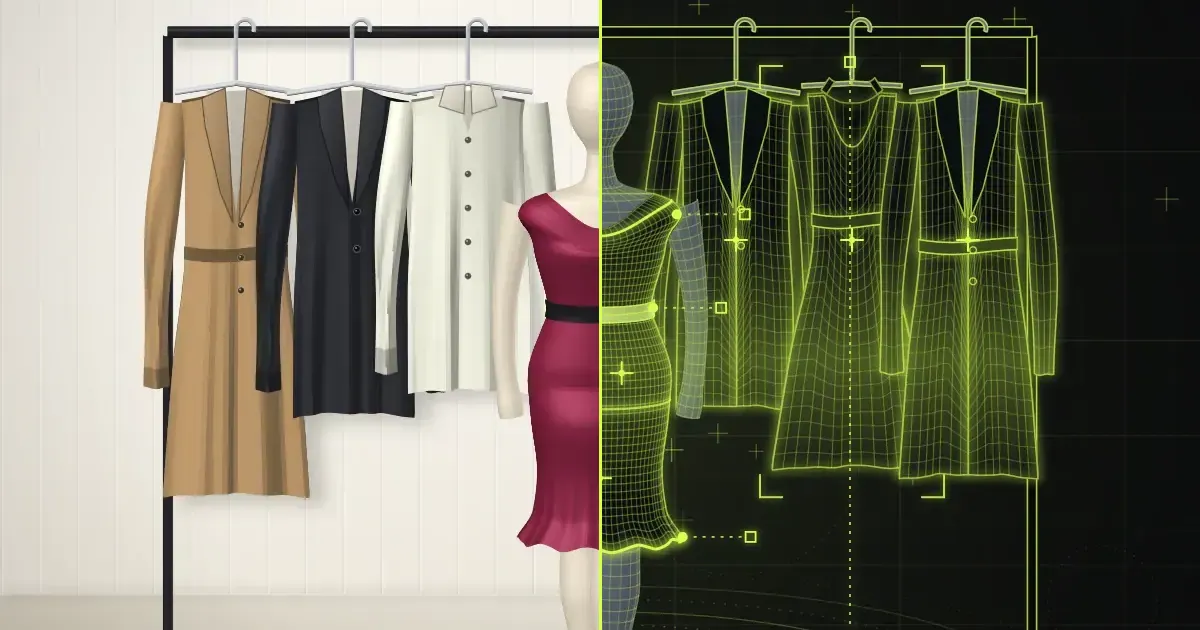
Shopping for clothes online means judging a garment from a flat photo, or from how it looks on a model, and hoping it will suit you. A virtual fitting room tries to close that gap by letting you preview a piece on yourself before you buy. This guide explains what the technology is, how it works, where it helps, where it still falls short, and what to look for when you try one.
Buying and selling online is well established in Malaysia: the Department of Statistics Malaysia reported e-commerce income of RM1,288.1 billion for 2024, growing 8.8 per cent on the year. That figure covers establishments across all sectors rather than fashion alone, but it shows the scale of the market in which shoppers now choose clothes on a screen.
What is a virtual fitting room?
A virtual fitting room is a digital tool that shows a garment on a shopper, or on a body that represents them, instead of leaving them to imagine it. You will also see it called virtual try-on, a virtual clothing experience, or outfit visualization. The names overlap, but the goal is the same: help the shopper see how a piece might look before committing to it.
It is worth knowing that the term covers more than one approach. Some tools work from a photo or camera image of the shopper. Others build a 3D avatar from measurements. They suit different purposes, so it helps to know which one you are looking at.
How does virtual fitting room technology work?
Providers build their systems differently, so this is the general pattern for the photo-based kind. A survey of the research field describes the task as synthesising an image of a person wearing a chosen garment, starting from an image of the person and an image of the garment. In practice that usually means:
- An image of the shopper. A photo the shopper uploads, or a picture taken at a screen or kiosk.
- An image of the garment. Typically the retailer’s product photo.
- Analysis of pose and body outline. The software works out where the garment should sit.
- An AI-generated preview. The garment is fitted onto the shopper image and shown back to them.
The same survey also notes that there is still a gap between current research progress and commercial applications. In everyday terms, previews can look convincing, but they are an approximation and can show visual flaws, which is why the limits below matter.
Key benefits of virtual fitting rooms for online fashion shopping
Explore clothing styles more conveniently
Without a preview, comparing styles means ordering several pieces or scrolling through many photos. With one, a shopper can look at different colours and cuts quickly, from a phone or a screen in store, and narrow down what they actually like.
Improve the online shopping experience
A product page that responds to the shopper feels more like browsing in a shop than reading a catalogue. For retailers it also makes online fashion shopping more interactive, and for shoppers it replaces some guesswork with something they can see.
Make more informed fashion choices
Seeing a colour or silhouette on yourself can reveal things a model photo cannot, such as whether a bold shade or a particular neckline works for you. That is a style decision, though, and not a size decision. Research on interactive try-on points out that many tools take a one-size-fits-all approach to showing clothes and give little direct guidance on choosing a size. Keep using the size chart.
Virtual fitting rooms and the future of AI in fashion
AI-powered fashion technology is moving from single try-on images towards a wider digital fashion experience: outfit suggestions built around one piece, previews that respond as you switch items, and the same experience across a website, a shop floor and events. Researchers describe image-based try-on as a way to change how people shop online, while also being open about unresolved issues.
The realistic expectation is steady improvement rather than perfection. Garment detail, body shape and image quality all remain active areas of work, so a good tool is one that is honest about what it shows.
How to choose a virtual fitting room experience
Whether you are a shopper trying one or a retailer comparing providers, these questions are worth asking:
- Does it show the garment on you or on a generic model? The point of a virtual fitting room is a preview of you.
- Is it easy to use? It should work in a browser or on a screen without a long setup.
- How are photos handled? Ask what is captured, how long it is kept and who can see it. Malaysia has a Personal Data Protection Act 2010, recently amended, so it is reasonable to expect clear answers.
- Is it honest about its limits? Be wary of any claim of perfect fit or exact fabric appearance.
- Does it use real products? A tool built around the store’s own range is more useful than a generic demo.
Exploring AI fashion experiences with Kannaadi.ai
Kannaadi.ai is a fashion technology company building AI virtual try-on. According to its website, garments are shown on the shopper rather than on a model, and the experience is built to feel responsive, like a mirror, not a render queue. Shoppers can switch colourways and looks in one flow, use AI Looks to turn a single piece into an outfit idea, and bring in a piece from a photo or by scanning it from the rail.
The same experience is designed to run online, on in-store kiosks and at events, and it is set up around a store’s own garments, jewellery or frames. You can see the full list on the Kannaadi.ai features page. As with any preview, it is best used to explore style and colour; this article makes no claims about measurements, sizing or fit.
Frequently asked questions
Is a virtual fitting room the same as virtual try-on?
Often, yes. Many people use the terms interchangeably. Some providers use “fitting room” for tools that focus on size and body shape, and “try-on” for tools that focus on how a style looks, so check what a specific tool actually does.
Can a virtual fitting room tell me what size to buy?
Not necessarily. Some tools aim to guide size selection, but many only show how a style looks. Always check the size chart and the seller’s returns policy.
Do I have to upload my photo?
It depends on the tool. Photo-based try-on needs an image of you, so read how it is used and stored before you share it.
Is it only for online stores?
No. A virtual fitting room can run on a product page, but it can also run on a kiosk or screen inside a shop, or at an event.
Conclusion
A virtual fitting room will not replace a physical fitting room or a size chart, but it can make online fashion shopping easier to explore and more informed about style and colour. The best experiences are honest about what a preview can and cannot show. If you would like to see how this works in practice, you can explore Kannaadi.ai.
Sources
- Song et al., “Image-Based Virtual Try-On: A Survey” (arXiv:2311.04811)
- Chen et al., “SiCo: An Interactive Size-Controllable Virtual Try-On Approach for Informed Decision-Making” (arXiv:2408.02803)
- Department of Statistics Malaysia, “Usage of ICT & E-Commerce by Establishment” (released 30 June 2026)
- Personal Data Protection Commissioner, Malaysia: Personal Data Protection Act 2010 (Act 709)
- Kannaadi.ai, product features