Retail guide
Virtual try on clothes in India: how clothing stores can improve the shopping experience

Anyone who types “virtual try on clothes India” into a search bar is usually asking one practical question: can a screen show me this outfit on me before I buy it, or before I travel to the shop?
This guide answers it from the other side of the counter. It is written for owners of clothing stores and boutiques, and for e-commerce teams in India: what virtual try-on is, how it works, where it genuinely helps, where it falls short, and how to introduce it without disturbing what already works in your store.
What is virtual try-on for clothes?
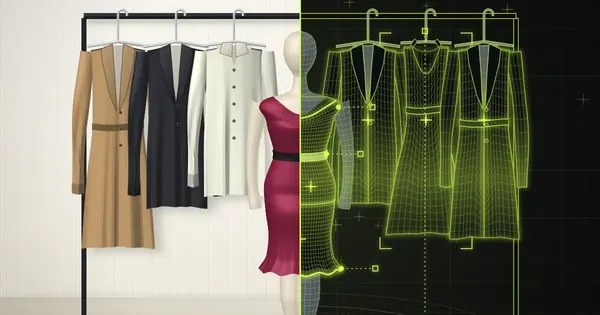
Virtual try-on shows a garment on the shopper digitally, so they do not have to imagine it from a product photo or from how it looks on a model. You will see it called AI virtual try-on, virtual clothing try-on or a virtual fitting room. The names differ; the idea is the same: the shopper sees a chosen piece on themselves.
It is equally important to say what it is not. A try-on preview is not a tailor’s measurement and not a physical trial. It is a decision aid: it helps a shopper narrow a large range down to the few pieces worth trying on, buying or asking about.
How AI virtual try-on works
Providers build this in different ways, so what follows is the general pattern rather than a description of any single product. Most AI try-on experiences combine three things:
- A garment image. Usually a clean product photograph, ideally shot consistently (same angle, plain background, even light).
- A shopper image. A photo the shopper uploads or a picture taken at a kiosk or screen.
- An AI-generated preview. The software works out the shopper’s pose and outline and places the garment on them, producing an image of how the piece may look.
The experience can then be delivered where the customer already is: on a product page, on a screen or kiosk on the shop floor, or at an event stand. The quality of the result depends heavily on the inputs, so clear, well-lit photographs and consistent garment images matter more than most retailers expect.
Why trying on matters so much in Indian clothing retail
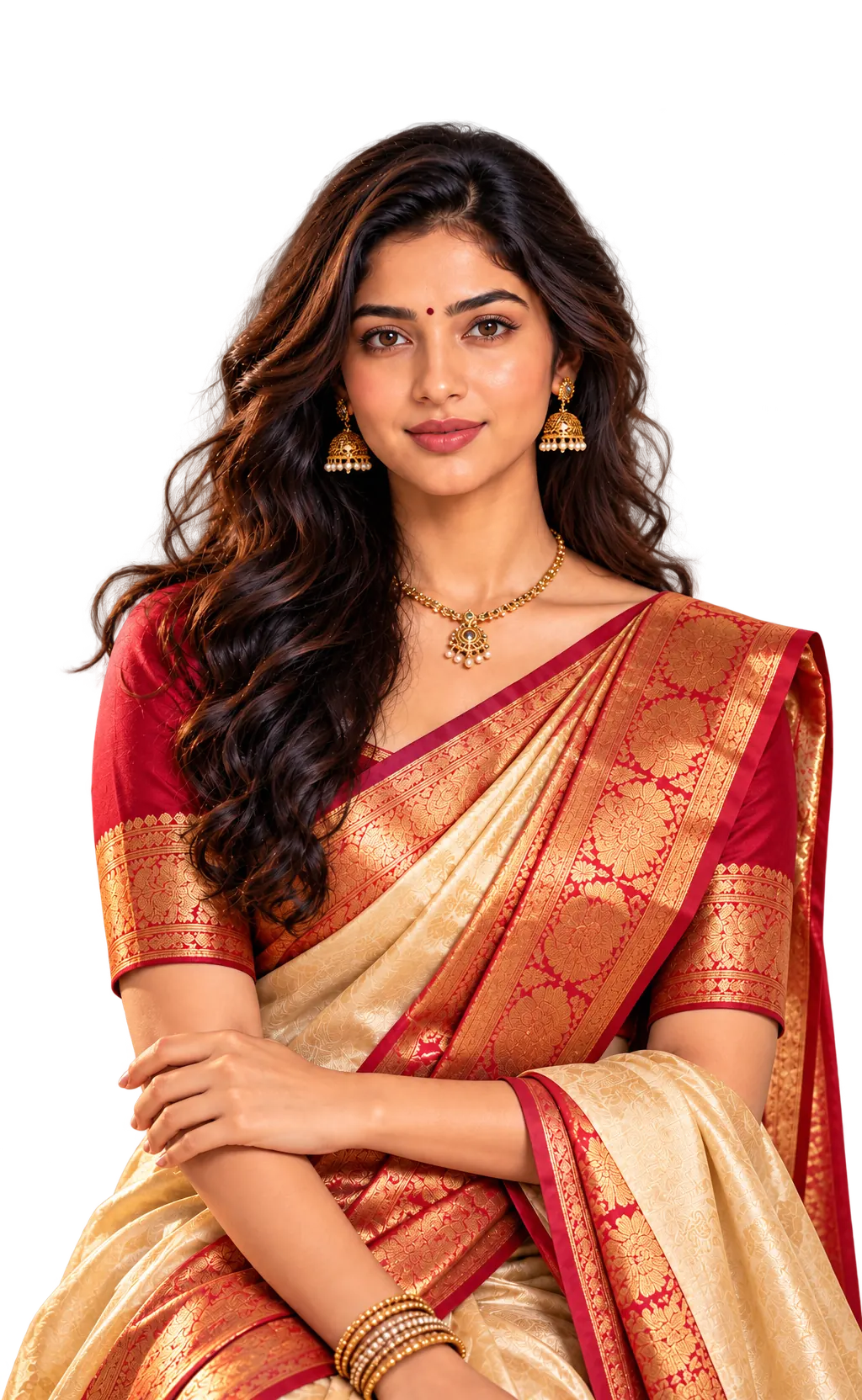
Many of the garments Indian retailers sell are hard to judge from a flat photograph. A saree is decided by its drape, border and pallu against the wearer. A lehenga, a sherwani or an occasion outfit is chosen for a specific event, often at a considerable price. These are patterns most retailers will recognise from their own shop floors, not statistics:
- Customers often shop with family and decide over more than one visit.
- Staff may pull out and unfold many pieces before something is shortlisted, which takes time and affects fabric and stock.
- Online, the question in the shopper’s mind is rarely “what does this look like?” but “what will this look like on me?”
A preview on the shopper does not remove these realities, but it can make the early stage of choosing faster and more engaging, which is where AI-powered fashion shopping tools aim to help.
Practical uses of virtual try on clothes in India
Saree and ethnic wear stores
Previewing colour, border and drape on the shopper before a saree is unfolded can shorten the “show me more” cycle. Saree and ethnic stores are one of the clearest fits, because the choice is so visual.
Boutiques and curated collections
A boutique sells on personal attention. A try-on screen can let a customer explore a curated collection and arrive with a shortlist, so the conversation with the stylist starts further along. See how this works for boutiques.
Multi-brand fashion stores and malls
A walk-up kiosk gives shoppers a reason to stop, play and then try something physically. In larger stores and shopping malls, that interactivity can be as valuable as the preview itself. Fashion stores can also run the same experience on the online catalogue.
Bridal and occasion wear
Bridal purchases involve appointments, relatives and long decisions. A preview lets a bride explore silhouettes before and between visits, so appointment time goes to the pieces she already likes. More on bridal stores.
Online catalogues and events
On an e-commerce product page, a try-on preview addresses the “how will it look on me?” doubt directly (see virtual try on for ecommerce). At exhibitions and pop-ups, the same experience doubles as a crowd-puller.
What AI-generated previews can and cannot do
Being clear about limits is what keeps customers’ trust. A good preview can:
- Help shoppers discover and shortlist pieces they might not have picked from a rail or a grid.
- Show how a colour and silhouette sit on them, in a way a model photograph cannot.
- Make browsing more interactive, in store and online.
It cannot, and should not be presented as able to:
- Guarantee size or fit. Keep your size charts, trial rooms and alteration services.
- Reproduce exact fabric weight, drape, texture, sheen or zari detail. An AI image is an approximation of the product.
- Show colours identically on every phone or screen.
- Replace trying on a high-value garment before purchase.
How to introduce virtual try-on in your clothing store
A measured rollout is easier to judge than a store-wide launch. A sensible order:
- Pick one category. Start where trying is the bottleneck, such as sarees, occasion wear or a new collection.
- Prepare consistent garment images. Clean, front-facing photographs on a plain background give the most reliable previews.
- Choose one touchpoint. A kiosk or screen on the floor, a counter display, or the product page of your online store. Learn from one before adding another.
- Brief your floor team. Staff should invite customers to try it and use the preview as a starting point for styling advice, not as a replacement for it.
- Handle customer photos responsibly. Tell customers what is captured, why and how long it is kept, and ask any provider how images are processed and stored. India’s Digital Personal Data Protection Act, 2023 is relevant here; take professional advice on your own obligations.
- Measure against your own baseline. Track what matters to you, such as how many customers use it, how many shortlist and then try pieces, enquiries, or returns online, and compare with the period before. Do not rely on other companies’ percentages.
Where Kannaadi.Ai fits
Kannaadi.Ai is a fashion technology company building AI virtual try-on for retail and ecommerce. The experience shows a garment on the shopper, and it is designed for clothing and ethnic wear, with jewellery and eyewear try-on alongside. Around it sit an AI outfit generator (AI Looks), and the option to scan or upload a dress and bring it into the try-on. It can run online, on in-store kiosks and screens, and at events. You can see the full list on the features page.
Kannaadi.Ai is built to support stylists and shop teams, not to replace them, and the setup for your catalogue and channels is agreed in a demo rather than assumed. The most useful way to judge any virtual try-on is on the garments you actually sell, which is why a demo with your own pieces tells you more than a generic video.
Common questions
Will virtual try-on replace trial rooms?
No. It helps shoppers decide what is worth trying, so the trial room is used for pieces they already like. Fit still has to be confirmed in person or through your usual size and returns process.
Does it only suit large retailers?
Not necessarily. The useful test is not store size but whether choosing is slowed down by how hard a garment is to judge from a photo. Single-store boutiques and ethnic wear shops often meet that test.
Is virtual try-on only for e-commerce?
No. It works on a product page, but it also works on a kiosk or screen in a physical store and at events, and a consistent experience across those places is often the aim.
A sensible next step
Virtual try on clothes in India is most valuable when it is treated as a way to help customers choose, honestly described and tested on one category first. If you would like to see how it looks with your own garments, you can book a Kannaadi.Ai demo, or read about virtual try-on for fashion stores first.