Comparison
AI Virtual Try-On Software vs Traditional Fitting Rooms: Which Is Better?
For decades, the fitting room has been the last step before a purchase. Today, AI Virtual Try-On Software offers another way to preview an outfit without changing clothes, and many store owners are asking how the two compare.
Shoppers pick garments, wait for a free room, change, check the mirror and decide. That routine still works. But on busy days the queue, the pile of returned pieces and the time staff spend fetching sizes are real costs.
This guide compares both approaches honestly, so you can decide what fits your store. It is written for owners of clothing stores, boutiques, textile showrooms and malls.
What Are Traditional Fitting Rooms?
Traditional fitting rooms are private cubicles where customers try on physical garments before buying. Almost every clothing store has them, and customers know exactly how they work. Here is what defines them:
- Physical clothing trials. The customer wears the real garment and feels the fabric, fit and comfort.
- Customer privacy. A closed room lets shoppers change comfortably.
- Space requirements. Each room needs floor area, mirrors, lighting and regular upkeep.
- Waiting time. When rooms are full, customers queue, and some leave.
- Limits with many outfits. Trying several looks means changing repeatedly, so most customers try only a few pieces.
What Is AI Virtual Try-On Software?
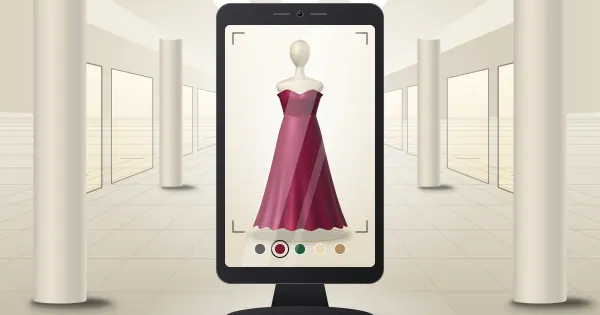
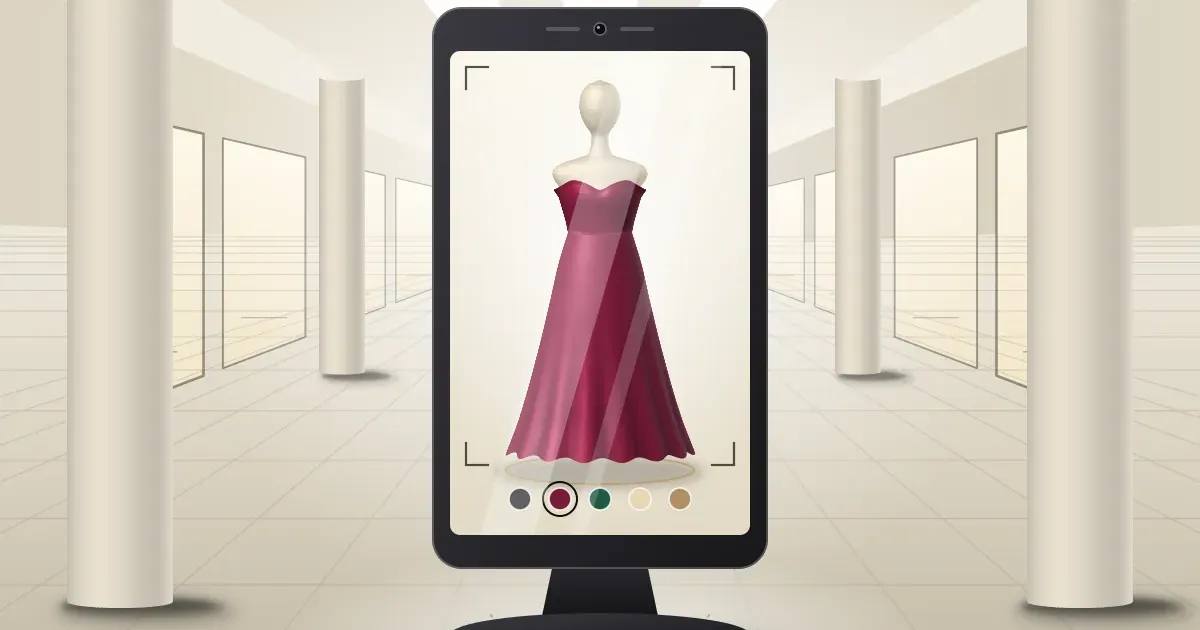
AI Virtual Try-On Software shows a chosen outfit on the customer digitally, so they can judge colour, style and silhouette without changing. It is a form of virtual try-on technology, and you may also hear it called an AI virtual fitting room or a digital trial room. In a store it usually runs on a kiosk.
A typical visit with an AI try-on kiosk looks like this:
- The customer steps up to the kiosk and has their photo taken.
- They choose a category, such as men’s, women’s or unisex outfits.
- They pick an outfit preset.
- The AI generates a photo of them wearing it, and they can try other looks.
- They download or share the image and carry on shopping.
For more background, see our guides to virtual fitting room technology and the AI Virtual Try-On Kiosk.
AI Virtual Try-On Software vs Traditional Fitting Rooms: Key Differences
Neither option is better on every point. This table shows where each one is stronger.
| Factor | AI Virtual Try-On Software | Traditional Fitting Rooms |
|---|---|---|
| Customer convenience | Quick preview on screen, no changing needed | Needs changing for each piece and sometimes a wait for a free room |
| Outfit exploration | Many looks can be previewed in a short time | Limited to the garments the customer carries in |
| Shopping experience | Interactive and digital | Familiar and private |
| Space requirements | A kiosk or screen on the floor | A dedicated room with mirror and lighting |
| Customer engagement | Gives shoppers something to explore, often with friends or family | Mostly an individual activity |
| Technology requirements | Needs power, connectivity and a kiosk or screen | None beyond lighting |
| Digital photo generation | Creates an AI-generated photo of the customer in the outfit | No digital output |
| Image download and sharing | QR code download and WhatsApp sharing | Not available unless the customer takes their own photos |
| Fit, fabric and comfort | Visual preview only | Confirms real size, fit and fabric feel |
The last row matters most. A preview helps a customer decide what to try, and only the fitting room confirms how it fits.
7 Benefits of AI Virtual Try-On Software for Fashion Retail Stores
These are potential benefits, not guaranteed results. Outcomes depend on your range, footfall, layout and how your team uses the tool.
1. Creates an Interactive Shopping Experience
Customers take part instead of only browsing racks. Seeing themselves in an outfit gives them a reason to stop and explore.
2. Allows Customers to Explore Different Outfit Styles
A shopper can preview colours and cuts they might not have picked up, without the effort of changing.
3. Reduces Dependence on Physical Trial Rooms
If customers shortlist on screen first, fewer garments may need to go into the fitting room, which can ease pressure at busy times.
4. Provides a Modern Digital Shopping Experience
A kiosk shows that your store invests in the customer experience.
5. Supports Customer Engagement
The kiosk gives staff a natural way to start a conversation, and customers a reason to spend time with your brand.
6. Offers Digital Photo Generation
Each customer gets a personalised AI-generated photo. It is something they keep, and it carries your store’s name with it.
7. Enables QR Code Downloads and WhatsApp Sharing
Customers scan a QR code to save their photo, or share it on WhatsApp to get opinions from family and friends right away.
Are Traditional Fitting Rooms Still Important?
Yes. Fitting rooms are the only way for a customer to check how a garment really fits, how the fabric feels and whether it is comfortable to wear. A screen cannot replace that, particularly for tailored pieces, sarees and bridal wear.
So the best way to think about it is that virtual try-on technology complements fitting rooms rather than replacing them. The software helps customers choose; the fitting room helps them confirm.
Which Is Better for Modern Fashion Retail Stores?
It depends on your store. Use these pointers as a starting point:
- Traditional fitting rooms are enough when your range is small, footfall is low and customers already try on most pieces without a wait.
- AI Virtual Try-On Software adds value when customers browse a wide range, rooms are often full, or you want a more interactive, modern shop floor.
- Both work best together when you want customers to explore digitally first and then confirm fit in a room.
Most fashion retailers will not need to choose one over the other. The question is whether adding a digital layer improves the experience you want to offer.
How to Choose the Right AI Virtual Try-On Software for Your Store
Compare vendors on these points before you commit:
- AI image generation quality. Ask for real sample outputs and check how natural the clothing looks.
- Ease of use. A first-time visitor should be able to use it without help.
- Kiosk compatibility. Confirm it works with your screen and camera, or that the vendor supplies them.
- Dress preset availability. Look for men’s, women’s and unisex presets that match your range.
- QR code download. Customers should be able to save their photo without typing details.
- WhatsApp sharing. Sharing is what takes the experience beyond your store.
- Customization options. Check branding and how easily you can update outfits as stock changes.
- Technical support. A shop-floor kiosk needs dependable help with setup and issues.
For a deeper buyer’s checklist, read our guide to virtual fitting room software.
How Kannaadi.Ai Helps Modernize Fashion Retail Stores
Kannaadi.Ai is an AI-powered virtual try-on solution designed for physical fashion retail. It helps stores add a more interactive digital trial experience on the shop floor. It is not a clothing marketplace or e-commerce platform.
- AI virtual try-on: customers preview outfits on themselves.
- Men, women and unisex dress presets: ready-to-use looks for every visitor.
- AI photo generation: a personalised image for each customer.
- QR code image download: photos saved to the phone in seconds.
- WhatsApp image sharing: looks sent to friends and family.
- Interactive kiosk experience: a simple self-service flow that works alongside your team.
Explore the full feature set or see how it suits fashion stores, boutiques and shopping malls. Ready to see it in your store? Book a demo or enquire about the virtual try-on kiosk.
Frequently Asked Questions
What is the difference between AI Virtual Try-On and traditional fitting rooms?
AI virtual try-on shows an outfit on the customer’s photo without changing clothes. A traditional fitting room lets them wear the real garment. One helps with choosing, the other with confirming fit.
How does AI Virtual Try-On Software work?
The kiosk captures the customer’s photo, the customer picks an outfit preset, and AI generates an image of them wearing it. They can then download or share the result.
Can AI Virtual Try-On replace traditional fitting rooms?
Not fully. It cannot show real fit or fabric feel, so most stores use it alongside fitting rooms.
Is AI Virtual Try-On Software suitable for clothing stores?
Yes. It suits clothing stores, boutiques, showrooms and malls that want a more interactive shop floor.
What are the benefits of virtual fitting room technology?
It can make shopping more interactive, help customers explore more looks, ease pressure on trial rooms and give the store a modern feel. Results vary by store.
Can customers download and share their virtual try-on photos?
Yes. With Kannaadi.Ai, customers can download their photo through a QR code or share it on WhatsApp.
How can retailers implement AI Virtual Try-On in their stores?
Choose a provider, decide which outfit presets to offer, pick a high-footfall spot for the kiosk, check power and connectivity, and brief your staff. A demo first helps you judge the fit with your store.
Conclusion
AI Virtual Try-On Software and traditional fitting rooms solve different problems. Fitting rooms confirm fit, fabric and comfort. Virtual try-on makes choosing faster, more interactive and easier to share. The right mix depends on your store requirements, customer preferences and the experience you want to offer.
If you want to add a digital trial room to your shop floor, explore Kannaadi.Ai, then book a demo or get in touch to enquire about a virtual try-on kiosk for your store.