Fashion ecommerce
AI Fashion Model Generator for Ecommerce: Features, Benefits and Business Use Cases
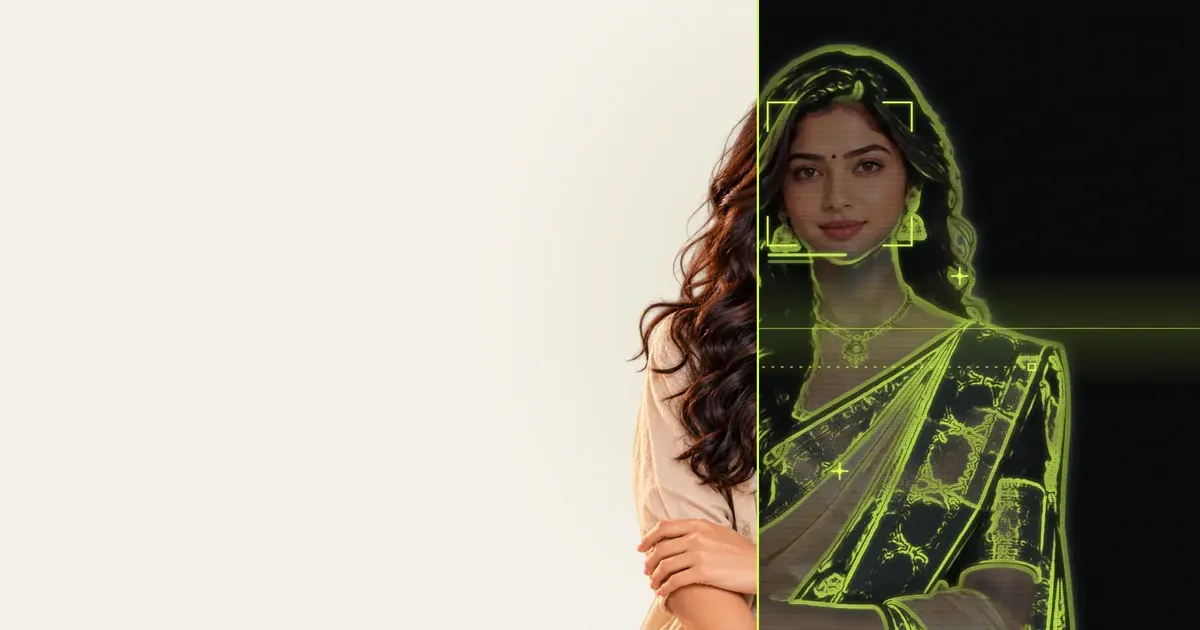
Every fashion ecommerce business faces the same presentation problem: a garment has to look good on a person before anyone will buy it, and putting it on a person means models, studios and shoots. An AI fashion model generator promises a different route, using AI to show clothing on generated models instead of hired ones. This guide explains what the technology is, how it works, where it helps, and what to check before you choose a tool, with a market focus on India but relevant to any online fashion business.
It also separates two things that are often confused: generating model imagery and letting a shopper try a garment on themselves. Kannaadi.Ai does the second, and this article is clear about where it does not do the first.
What is an AI fashion model generator?
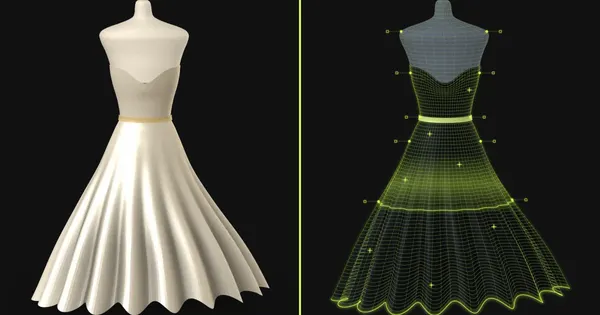
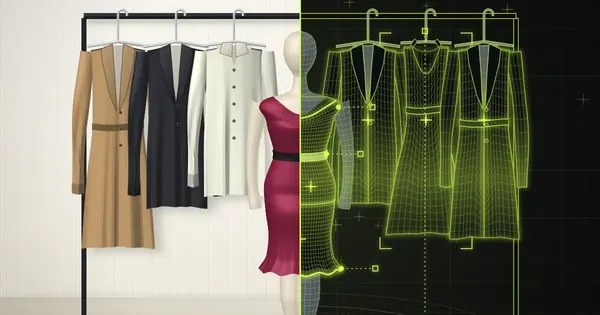
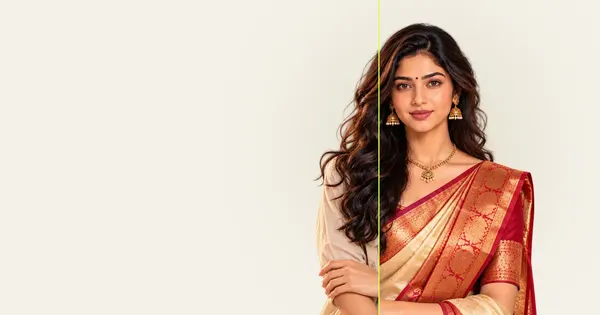
An AI fashion model generator is a tool that produces images of people wearing a garment without a live photoshoot. You typically supply a photo of the clothing, choose or describe the kind of model you want, and the AI produces an image of that model wearing it. It sits within the broader area of AI product photography, which covers AI-created or AI-edited product and campaign images.
Its purpose is content production: catalogue pages, marketing creative and social posts. It is not the same as AI virtual try-on, which is covered in a later section.
How does an AI fashion model generator work?
Tools differ, so this is the general workflow rather than a description of any one product:
- Input. You upload clear product images, often on a plain background, and set preferences such as pose, setting or model appearance.
- Generation. The AI creates an image of a model wearing the garment.
- Review. Someone on your team checks the output for accuracy.
- Revision. Imperfect results are regenerated or corrected before use.
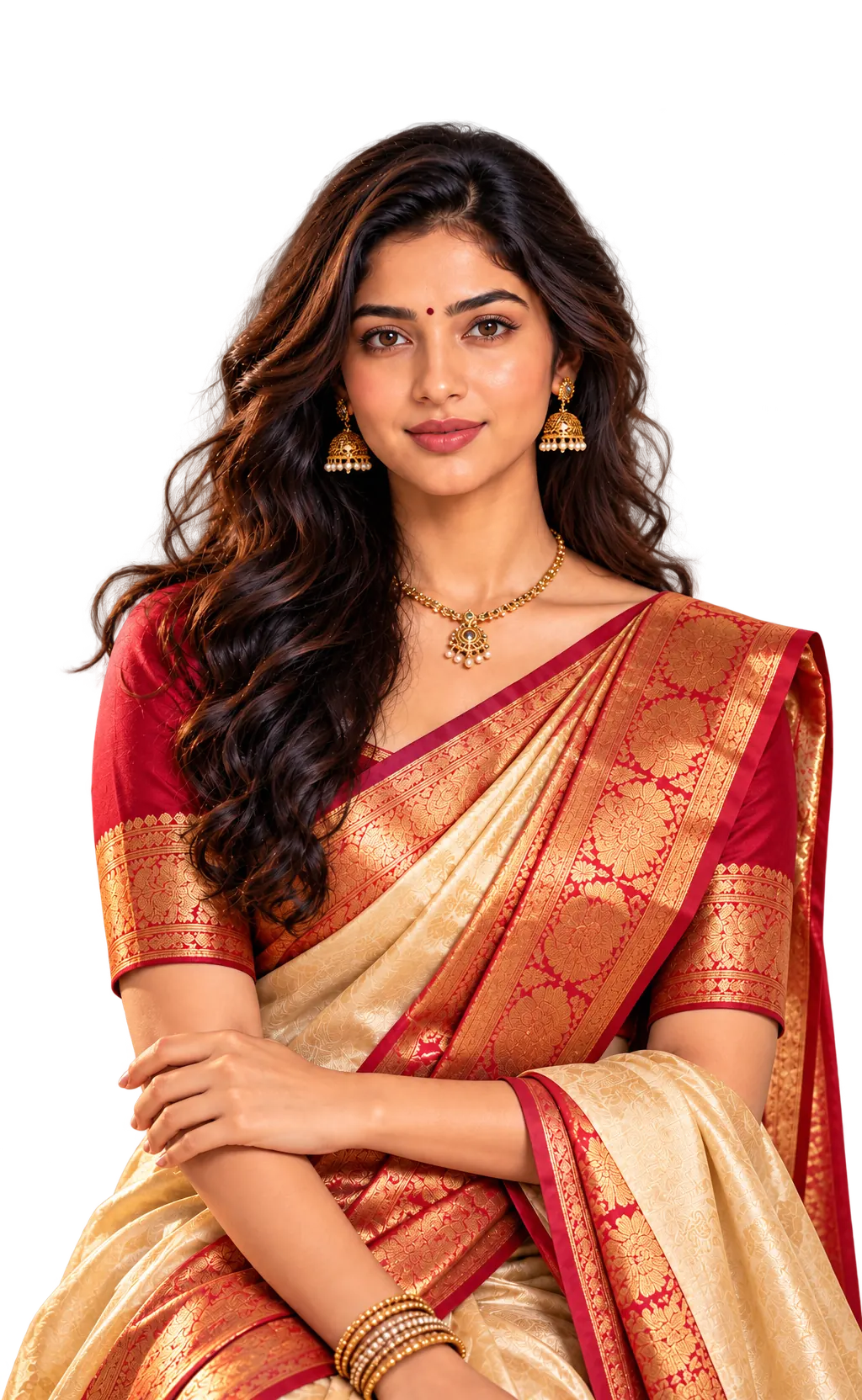
The review step matters most. Clothing with detailed embroidery, patterns, transparency or complex draping, which includes many sarees and ethnic garments, can be harder for AI to reproduce faithfully. Treat every output as something to check against the real product, not as a finished photograph.
Why ecommerce businesses are exploring AI fashion models
The interest is practical, and it comes down to a few recurring needs:
- Product presentation. Showing a garment on a person helps shoppers understand cut and style.
- Content volume. Frequent new collections mean frequent new imagery.
- Catalogue consistency. A consistent look across hundreds of products is hard to maintain across separate shoots.
- Marketing creative. Campaign and social content need a steady supply of fresh visuals.
- Operational workflow. Fewer logistics around studios and models can simplify production.
These are possible benefits, not guarantees. Savings, speed and sales effects depend on your products, your quality bar and your process, and no reliable single figure applies to every business.
AI fashion model generator vs traditional fashion photography
| Factor | Traditional photography | AI-generated model imagery |
|---|---|---|
| Production workflow | Plan, shoot, retouch and deliver, with models, studio and crew. | Upload product images, generate, review and revise. |
| Cost considerations | Costs usually scale with shoot days, models and crew. | Costs depend on the tool’s pricing model, volume and revision effort. |
| Turnaround time | Tied to shoot scheduling and editing. | Can be quicker per image, but review and corrections take time. |
| Creative flexibility | Direct control of styling, light and pose on a real set. | Flexible in settings and models, within what the tool can render. |
| Image consistency | Consistent when the same team and setup are used. | Can vary between generations; check each result. |
| Quality control | The garment is photographed as it is. | Needs careful checking that the garment is reproduced faithfully. |
| Best suited to | Hero images, premium campaigns and detail-sensitive garments. | High-volume catalogue and supporting creative where fast iteration matters. |
The better option depends on the product, the quality you need, your budget and your business model. Many businesses will use both: photography where accuracy matters most, and AI where speed and volume matter more.
What to look for before choosing a tool
- Output quality and realism. Do the images look believable across different garments and models?
- Clothing detail preservation. Are colours, prints, embroidery and fit reproduced faithfully?
- Commercial usage rights. Check what you are allowed to do with the generated images, including advertising and marketplaces.
- Privacy and image handling. Ask how uploaded images are stored and used.
- Ease of use and workflow fit. Can your team use it without specialist skills, and does it fit how you publish products?
- Pricing transparency and scalability. Understand costs at your volume, including regeneration.
- Support. Check what help is available when results are not right.
Also check the rules of the marketplaces and ad platforms you sell on, since requirements about AI-generated imagery can differ.
AI fashion model generator vs AI virtual try-on
The two are often mentioned together, but they solve different problems:
- An AI fashion model generator creates imagery of generated models wearing your garments, for you to publish.
- AI virtual try-on shows a garment on the actual shopper, so they can judge it on themselves.
One produces content for your store; the other produces an interactive experience for your customer. Implementations vary by product, so check what a given tool does. For how try-on previews work, see our explainer on virtual fitting room technology.
How Kannaadi.Ai can support fashion businesses
What Kannaadi.Ai does is AI virtual try-on: according to its website, garments are shown on the shopper rather than on a model, shoppers can switch colourways and looks, and AI Looks suggests outfit ideas around a chosen piece. It extends to jewellery and eyewear, and can run online, on in-store kiosks and at events. It is designed to sit alongside your existing product pages and catalogue, with scope and integration details agreed in a demo.
For a fashion ecommerce business, the practical fit is the shopper’s side of the page: after your product imagery has done its job, try-on lets the customer see the piece on themselves. See the ecommerce use cases for how that works.
Frequently asked questions
Can AI fashion models replace traditional fashion photography?
Not entirely, in most cases. AI-generated imagery can suit high-volume catalogue and supporting content, while photography often remains the better choice where garment accuracy or brand image matters most.
What should I check before using AI-generated fashion images?
Compare each image with the real garment, confirm your commercial usage rights, check how the tool handles your uploads, and review marketplace and advertising rules for AI imagery.
Is there a free AI fashion model generator?
Some tools offer free tiers or trials, usually with limits on volume, quality or usage rights, so read the terms before using the output commercially. Kannaadi.Ai does not publish pricing, so ask about it in a demo.
Does Kannaadi.Ai generate fashion models?
No. It offers AI virtual try-on, showing garments on the shopper, along with AI Looks for outfit ideas.
How can a fashion business evaluate an AI-powered solution?
Test it with your own products, start with one category, and judge it against your own goals instead of someone else’s figures.
Choosing the right AI approach
An AI fashion model generator can help with the content side of fashion ecommerce, provided its output is checked and its usage rights are clear. AI virtual try-on addresses a different problem: helping the shopper see a piece on themselves. Knowing which one you need is the first step. If shopper-side try-on is what you are looking for, book a Kannaadi.Ai demo to see it with your own garments.