Fashion ecommerce
How an AI Shopping Assistant Can Transform the Fashion Ecommerce Experience
A shopper lands on your product page, scrolls through four photos of a beautifully styled model, and leaves without buying. They did not dislike the piece; they simply could not tell whether it would look good on them. An AI shopping assistant is one way to close that gap: software that guides a shopper through choosing, so they explore more confidently instead of guessing. This guide is for fashion and jewellery business owners deciding whether it deserves a place in their store.
It covers the problem, what an AI shopping assistant actually is, where it can help, its limits, and how Kannaadi.Ai’s virtual try-on fits. It is written to help you decide, so it separates what Kannaadi.Ai publishes from what is simply possible with the technology.
The challenges fashion ecommerce businesses face
Fashion is a visual, personal purchase, and a product page is an awkward place to make one. Most owners recognise these problems:
- Customers cannot picture the product on themselves. Product photos and model shots show how a piece looks on someone else.
- Hesitation before buying. A shopper who is unsure about colour, style or suitability tends to wait, compare or leave.
- Browsing that stops at the first click. Many visitors view one product and never discover the rest of the range.
- The cost of constant imagery. New collections mean new photography, and a catalogue that changes often keeps that bill running.
- Sameness. When every store offers the same grid of photos, it is hard to make shopping feel like an experience.
None of these is a technology problem at heart; they are confidence and engagement problems. That is the lens to use when judging any tool.
What is an AI shopping assistant?
An AI shopping assistant is software that helps a shopper find, compare and decide, taking over some of the guidance a good sales associate would give in a physical shop. The term covers different approaches:
- Conversational assistants that answer questions or recommend products in a chat.
- Recommendation-led assistants, sometimes called an AI fashion stylist, that suggest outfits and combinations.
- Visual assistants that show the shopper how a piece might look on them, in what many people call an AI clothes changer.
It is worth being precise here. Kannaadi.Ai does not present itself as a chat assistant. Its assistant-like capabilities are visual and recommendation-led: AI virtual try-on, and AI Looks for outfit ideas. If a conversational assistant is what you need, that is a different tool.
How AI can improve the fashion shopping experience
The difference is easiest to see side by side:
- Traditional product page: the shopper studies photos of a model, imagines the piece on themselves, and decides alone.
- AI-powered experience: the shopper sees the piece on themselves, switches colours, and gets outfit ideas built around what they chose.
The potential value for a business is a more interactive shopping experience, better product engagement and less friction in product discovery. These are possibilities, not promises. Results depend on your products, your traffic and how the experience is placed in the journey.
Practical business use cases
Clothing and fashion brands
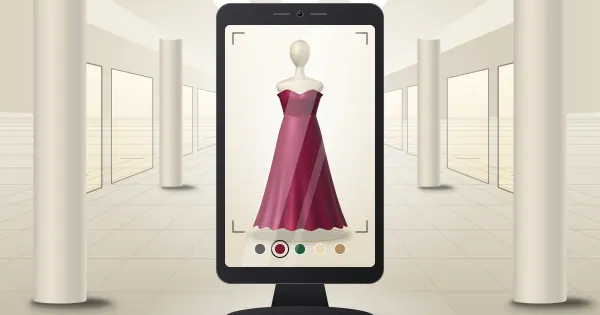
A try-on button on the product page lets a shopper see the garment on themselves before deciding. Kannaadi.Ai is built to work alongside your existing product pages, so you are adding to your store, not rebuilding it. For more on how a try-on preview works, see our explainer on virtual fitting room technology.
Jewellery retailers
Jewellery is hard to judge from a flat image because scale and style only make sense when worn. Kannaadi.Ai includes jewellery try-on for necklaces and earrings on the wearer, and there is a dedicated page for jewellery stores.
Eyewear brands
Shoppers can see frames on their own face and compare shapes and styles, which is the question that holds most eyewear purchases back. Details are on the eyewear try-on feature.
Catalogues that need more discovery
An outfit generator such as AI Looks starts from one chosen piece and suggests how it works with others, so shoppers discover items they would not have searched for. This is the closest thing Kannaadi.Ai offers to an AI fashion stylist. Our guide to the AI outfit generator goes deeper.
Where AI fashion photography fits
AI fashion photography usually means generating or editing product and campaign imagery. That is a different job from try-on, which shows a garment on the shopper rather than on a model. Kannaadi.Ai does not publish an AI photography feature, so do not expect it to replace your product photography. Try-on starts from garment images you already have, such as a dress photo.
How Kannaadi.Ai can help
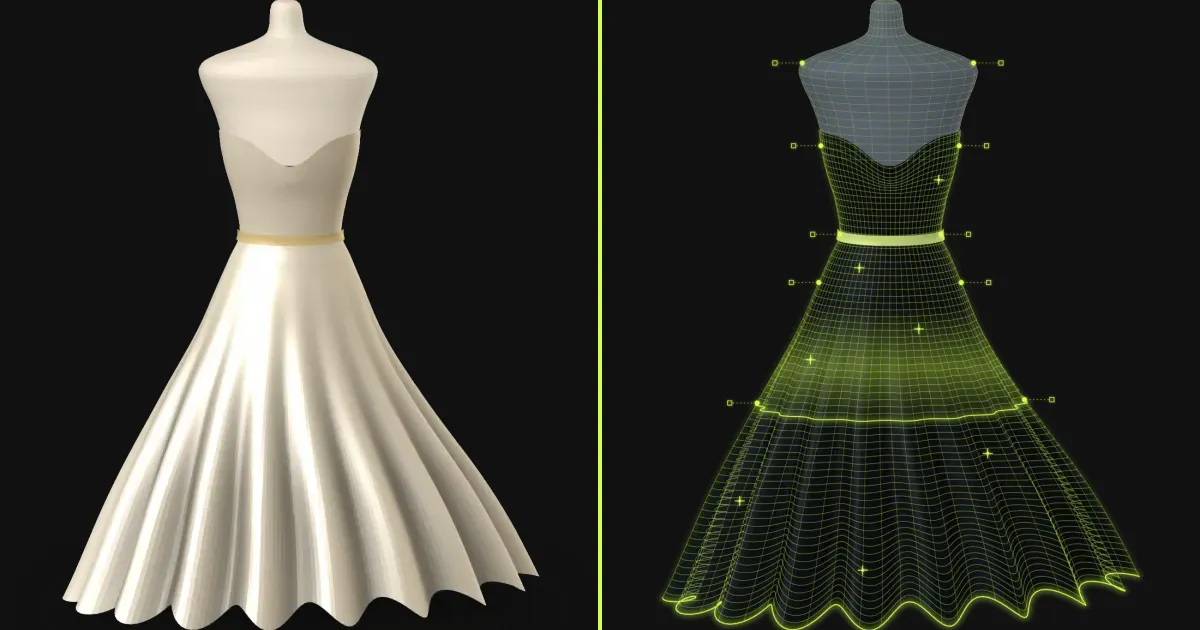
Kannaadi.Ai is a fashion technology company building AI virtual try-on for retail and ecommerce. According to its website, the experience shows garments on the shopper rather than on a model, lets shoppers change colourways and looks, and builds outfit ideas with AI Looks. Shoppers can also bring in a dress from a photo. It extends to jewellery and eyewear, and the same experience is designed for online stores, in-store kiosks and events.
Setup starts from your own garments, jewellery or frames, not a generic demo, and the scope and integration details are agreed with you in a demo. Kannaadi.Ai is built to support your team’s styling advice, not to replace it. You can see the whole list on the features page.
Why fashion businesses should consider AI-powered virtual try-on
There is no need to rush, but there is a good reason to start small. A try-on experience on one category lets you learn how your own customers use it, against your own baseline, before you commit further. Those lessons are specific to your range and audience, and no industry figure can give them to you.
It is a particularly good fit if your customers hesitate over how a product will look on them, if your catalogue has depth that browsing does not reach, or if you want a more engaging experience than a grid of photos. It is a weaker fit if your main need is a chat assistant, or if your products are bought without any visual consideration.
Frequently asked questions
Do I need to rebuild my store to use it?
No. Kannaadi.Ai is designed to sit alongside your current catalogue and channels, and integration details are agreed in a demo.
Is it suitable for a small business?
It can be. Kannaadi.Ai says it is designed to scale down as well as up, and you can start with a focused set of pieces.
Will customers actually use it?
That cannot be promised. Place it where the buying decision happens, make it easy to start, and measure usage against your own goals before expanding.
Does it guarantee more sales?
No. It is built to help shoppers reach a more confident decision, but results depend on your products, traffic and customer journey.
What does it cost?
Pricing is not published on the website, so the best way to get an answer is to ask during a demo.
Ready to explore an AI shopping assistant for your store?
An AI shopping assistant will not fix a weak product range, but for fashion and jewellery businesses it can make browsing more interactive and help customers feel surer about what they choose. Kannaadi.Ai’s virtual try-on and AI Looks are built for exactly that. If you would like to see how it would work with your own pieces, book a demo to see how Kannaadi.Ai can transform your customers’ shopping experience, or contact the team with your questions.