Retail technology
How Smart Retail Solutions Can Transform Fashion Stores
Walk into any busy clothing showroom on a weekend and the pattern is familiar: customers browse for a while, staff run between racks and fitting rooms, and some shoppers leave without trying anything because the effort feels too high. Smart retail solutions aim to ease that friction by adding technology to the shop floor that helps customers explore, compare and decide. This guide is for fashion retail owners and decision-makers in India and beyond who want a practical view of what is available and how to start.
It covers the main categories of fashion technology, where in-store virtual try-on fits, and a step-by-step approach to adopting it. Where a statement is about Kannaadi.Ai, it reflects what the company publishes on its website.
What are smart retail solutions?
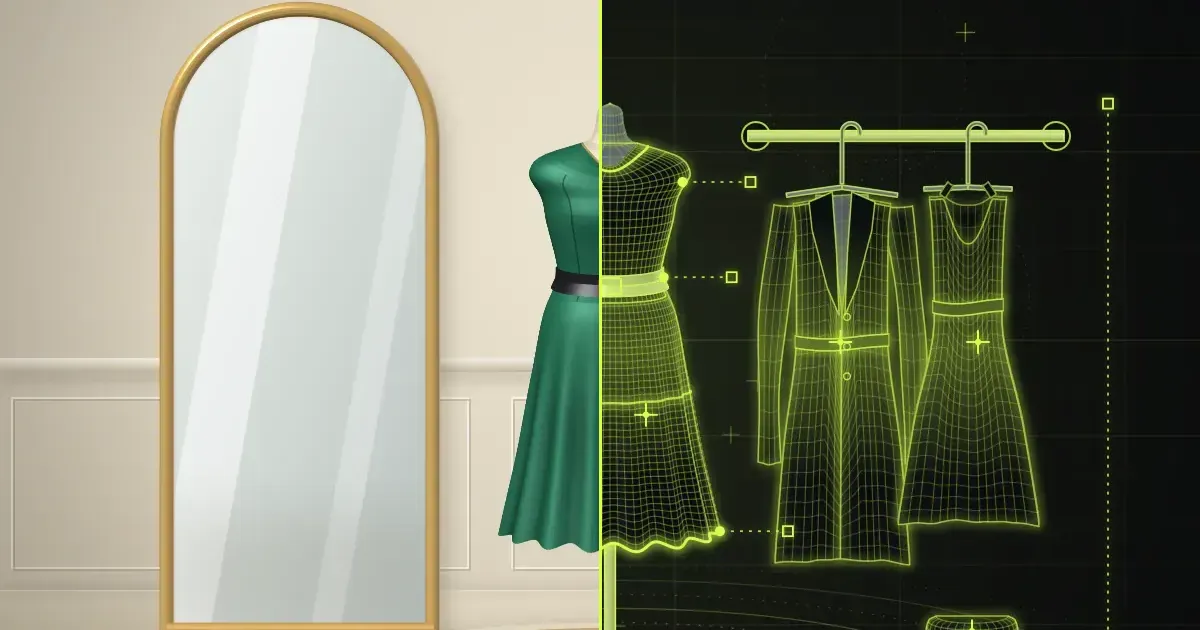
Smart retail solutions are digital tools that make a physical store more responsive to its customers and easier for staff to run. The term is broad and covers anything from stock tracking to interactive screens. For fashion stores, the most visible examples are those customers touch directly, such as kiosks and try-on experiences, alongside the systems that support them behind the scenes.
You will also see the same ideas described as retail technology solutions or digital retail. The label matters less than the question behind it: does the technology make choosing easier for customers, or running the store easier for your team?
Why traditional fashion stores need smart retail technology
Fashion is a visual, personal purchase, and a traditional store depends on a lot of manual effort to support it. A few pressures are common:
- Limited fitting rooms. Only so many customers can try garments at once, and busy periods create queues.
- Time spent fetching. Staff carry pieces back and forth, and unfolding items such as sarees takes effort that not every browsing customer will repay.
- Hesitation. Customers often cannot picture how a colour or style will look on them, so they leave to think about it.
- Competing attention. Shoppers compare options on their phones, so a store experience needs a reason to feel worthwhile.
None of this means traditional retail is failing. It means that the moments where customers hesitate are the moments where technology can help most.
Key smart retail technologies transforming fashion stores
These are the categories most fashion retailers consider. Each solves a different problem, so you rarely need all of them at once.
Virtual try-on and the smart fitting room
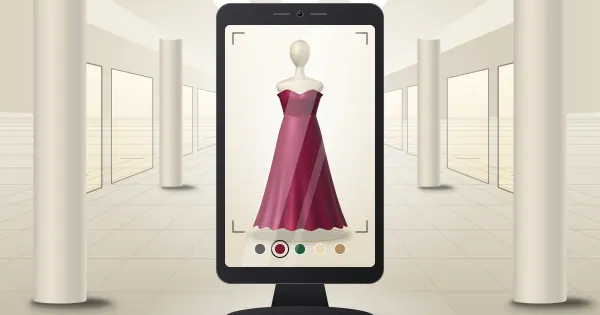
Virtual try-on shows a garment on the shopper without changing clothes. Some people call this a smart fitting room, although the term can also describe other setups, such as connected mirrors, so check what a vendor actually offers.
Interactive retail displays and kiosks
An interactive retail display is a screen that customers use themselves, from digital catalogues to styling tools. A walk-up kiosk is the most common form on a fashion floor.
Digital catalogues and virtual showroom software
Virtual showroom software usually presents your range digitally, for example so customers or buyers can browse a collection on screen. It is useful for range visibility, but it is a different job from showing a garment on a customer.
Back-of-house systems
Inventory tracking, billing and customer records keep the store running. They are less visible to shoppers, but they determine how well any customer-facing tool can fit into your daily workflow.
How virtual try-on technology improves the in-store customer experience
Virtual try-on addresses the hesitation problem directly. A customer sees a piece on themselves in seconds, switches colours, and decides whether it is worth carrying to a fitting room. For the store, the fitting room is then used for pieces the customer already likes, which can ease queues. Whether and how much depends on your layout and footfall.
It also changes the conversation. Instead of starting with “what are you looking for?”, staff can start from what the customer has just seen on the screen. To be clear about limits: a preview shows colour, silhouette and style. It does not measure or guarantee fit, and fittings and final advice stay with your team.
Benefits of smart retail solutions for clothing showrooms
These are potential benefits, not guaranteed outcomes. What you gain depends on your range, layout, footfall and how your staff use the tool.
- More engaging browsing. An interactive screen gives customers something to do beyond looking at racks.
- More styles explored. Trying looks on a screen costs customers little effort, so they may consider pieces they would have skipped.
- A lighter load on fitting rooms and staff. Customers narrow their choices before they ask for a trial.
- A stronger first impression. A screen near the entrance can make the store feel current and invite people in.
- Shareable moments. A look a customer can share extends the store’s reach beyond the visit.
How fashion retailers can implement in-store virtual try-on
- Define the problem. Is it fitting-room queues, slow browsing, or a quiet shopfront? The answer shapes everything else.
- Start with one category. Choose the range where choosing is hardest, such as sarees, occasion wear or a new collection.
- Choose the location. Entrance, rail wall or near the fitting rooms each serve a different purpose. Walk the floor at a busy hour first.
- Plan hardware and space. Decide where a screen or kiosk can stand, and what power and connectivity are available.
- Check how it fits your systems. If you use a billing or POS system, ask how a vendor would work alongside it, instead of assuming a connection.
- Brief your team. Staff should invite customers to try it and use the preview to start the conversation.
- Review privacy. Ask how customer images are handled and make sure customers know what happens to them.
- Measure against your own baseline. Compare how customers use the store before and after, instead of relying on someone else’s figures.
Our guide to choosing an AI outfit generator for fashion stores goes deeper on what to evaluate in a vendor.
How Kannaadi.Ai helps fashion stores adopt smart retail solutions
Kannaadi.Ai is a fashion technology company that builds AI virtual try-on for retail. According to its website, the experience shows garments on the shopper instead of on a model, and responds as they switch pieces and colours. The relevant capabilities for a physical store are:
- A walk-up kiosk experience. An attract screen invites passers-by, a simple guide shows where to stand, and the shopper switches colours and looks with a tap. It can be branded to your store or campaign.
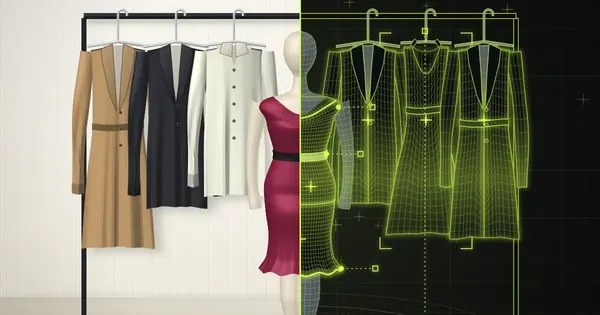
- Scan or upload a dress. In store, a shopper can scan a garment from the rail or upload a photo of a dress they have in mind, and bring it straight into the try-on.
- AI Looks. Outfit ideas built around the piece the shopper has chosen.
- A share-ready look. The experience can finish with a look the shopper can take away or share, and campaigns can add a lucky-draw reward.
Hardware, placement, scope and integration details are agreed in a demo, based on your space and footfall, and measurements, fittings and the final decision stay with your team. Kannaadi.Ai does not publish details on POS integration, smart-mirror hardware, analytics or pricing, so treat those as questions to ask. You can see the setup for different formats on the fashion stores, boutiques and shopping malls pages.
Future of smart technology in fashion retail
Expect the in-store and digital experiences to blend. Customers already move between phone and shop, so tools that give a consistent experience in both places are likely to matter more, and AI-based previews and styling suggestions will probably become more convincing as the technology matures.
The practical advice does not change much, though. Retailers who test on one category, measure against their own goals and keep their staff at the centre of the experience will be better placed to judge what is working than those who adopt everything at once.
Conclusion: start small, and start with your customers
Smart retail solutions are most valuable where customers hesitate and staff are stretched: choosing, trying and deciding. In-store virtual try-on is one practical way to address that, as part of a wider set of fashion technology choices. If you would like to understand how the experience works on a real shop floor, explore Kannaadi.Ai’s features, or contact the team to arrange a demonstration for your store.